For years, the manufacturing talent conversation has focused on a familiar challenge: not enough workers. Labor shortages, high turnover, and increasing production demands have all reinforced the idea that hiring is the industry’s biggest constraint.
But even when companies are able to bring people in, another problem quickly surfaces.
New hires are not becoming productive fast enough.
The issue is not just about finding talent, it’s about how that talent is trained. And in many cases, the system behind that training is no longer equipped for the realities of modern manufacturing.
A Model That No Longer Scales
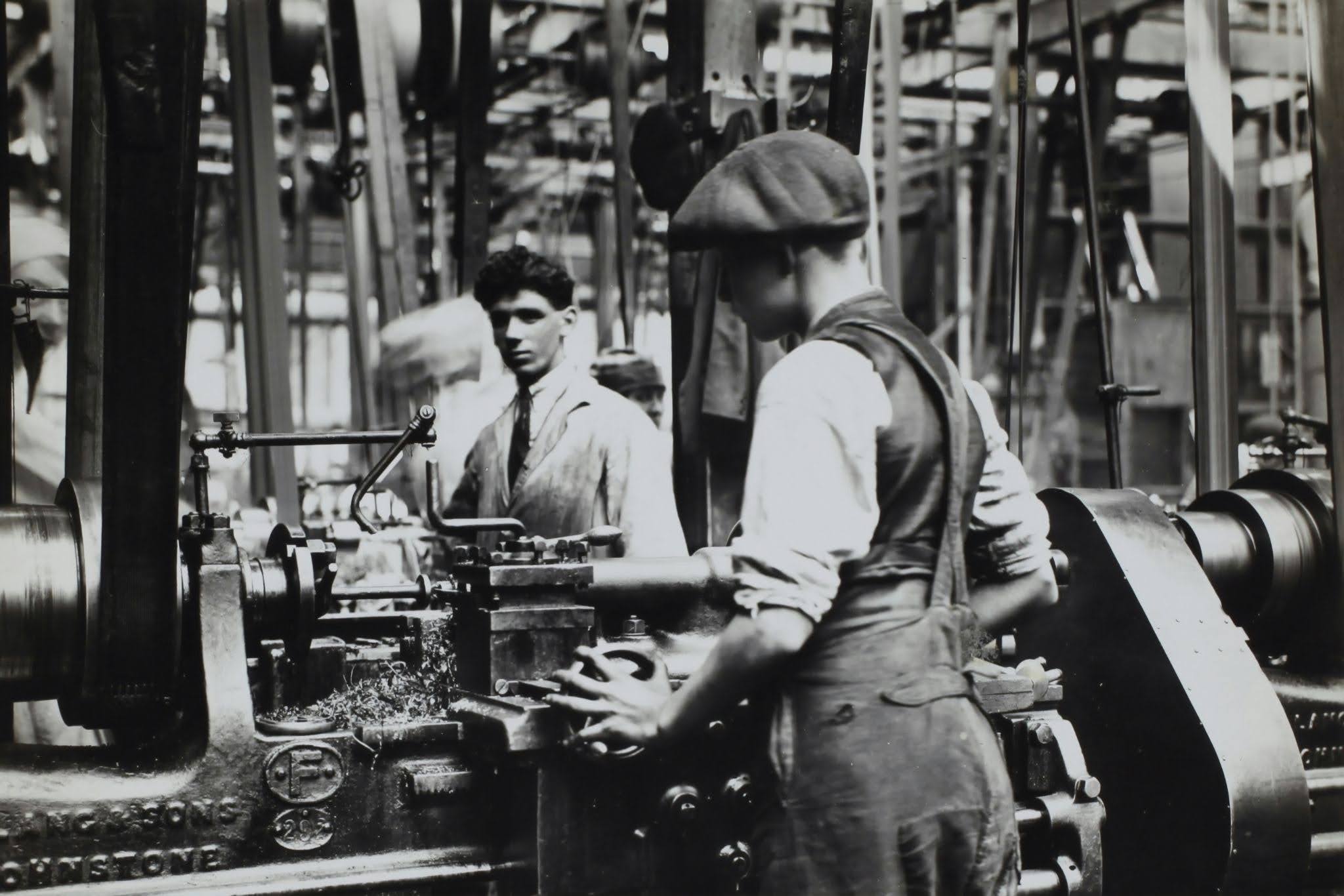
Traditional training in manufacturing was built for a different kind of environment, one where processes were stable, product changes were infrequent, and experience could be accumulated over time.
New workers learned by shadowing more experienced employees. They relied on manuals, static instructions, and informal knowledge passed down across teams. Over time, repetition built expertise.
That model worked when the pace of change was slower.
Today, it struggles to keep up.
Complexity Has Outpaced Training
Modern manufacturing environments are more dynamic than ever. Products evolve rapidly, processes are updated frequently, and digital systems generate constant streams of new information.
Workers are expected to operate within this complexity almost immediately.
But the way they are trained has barely changed.
Instead of being guided through structured, real-time workflows, many are still expected to interpret instructions, navigate outdated documentation, and rely on fragmented knowledge sources. The gap between what the system knows and what the worker can execute has widened.
As complexity increases, that gap becomes harder to manage.
Knowledge Doesn’t Scale
The challenge is not a lack of knowledge. In fact, manufacturing organizations are rich in it.
Engineering teams maintain detailed product definitions. Experienced workers develop deep operational expertise. Data is continuously generated across systems and processes.
But much of that knowledge is not structured in a way that can be consistently delivered at the point of execution. It lives in silos: in systems, in documents, and in people.
As a result, every new worker’s experience is different. What they learn depends on who trains them, what version of the process they see, and how much context they are able to piece together on their own.
This makes consistency difficult and scalability nearly impossible.
Execution Still Depends on Interpretation
On the factory floor, this breakdown becomes visible in how work is actually performed.
Workers are often asked to interpret information rather than follow clear, guided steps. They move between systems, compare instructions, and rely on judgment to fill in gaps. Even in digitally advanced environments, the final stage of execution remains largely manual.
That introduces variability.
Tasks are completed differently across shifts and teams. Updates are applied inconsistently. Errors occur not because workers lack skill, but because the system assumes understanding instead of enabling it.
Over time, this slows down onboarding, increases dependence on experienced employees, and makes it harder for organizations to maintain consistent output.
Moving Beyond Training as We Know It
A growing number of manufacturers are beginning to rethink this model, not by improving training, but by reducing the need for it.
Instead of relying on workers to absorb and interpret large amounts of information upfront, they are shifting toward systems that guide execution in real time.
Often described as a visual execution layer, this approach transforms engineering and operational data into structured, step-by-step workflows that workers can follow directly on the floor. Instructions are no longer static or disconnected; they are dynamic, contextual, and tied to the source data that defines the work.
Companies like Canvas Envision are working within this space, focusing on how AI can help translate complex product and process data into interactive workflows that support execution as it happens.
The goal is not to eliminate expertise, but to make it scalable.
What Comes Next
When execution is guided rather than interpreted, the impact is immediate.
New workers become productive faster. Processes become more consistent across teams and locations. And organizations become less dependent on individual experience to maintain quality.
More importantly, performance shifts from being person-dependent to system-driven. As manufacturing continues to evolve, this shift is becoming harder to ignore.
The companies that succeed will not be the ones that simply hire more workers. They will be the ones that enable their workforce to perform, quickly, consistently, and at scale.
Because in today’s environment, training is no longer just a support function. It’s a system design problem.