
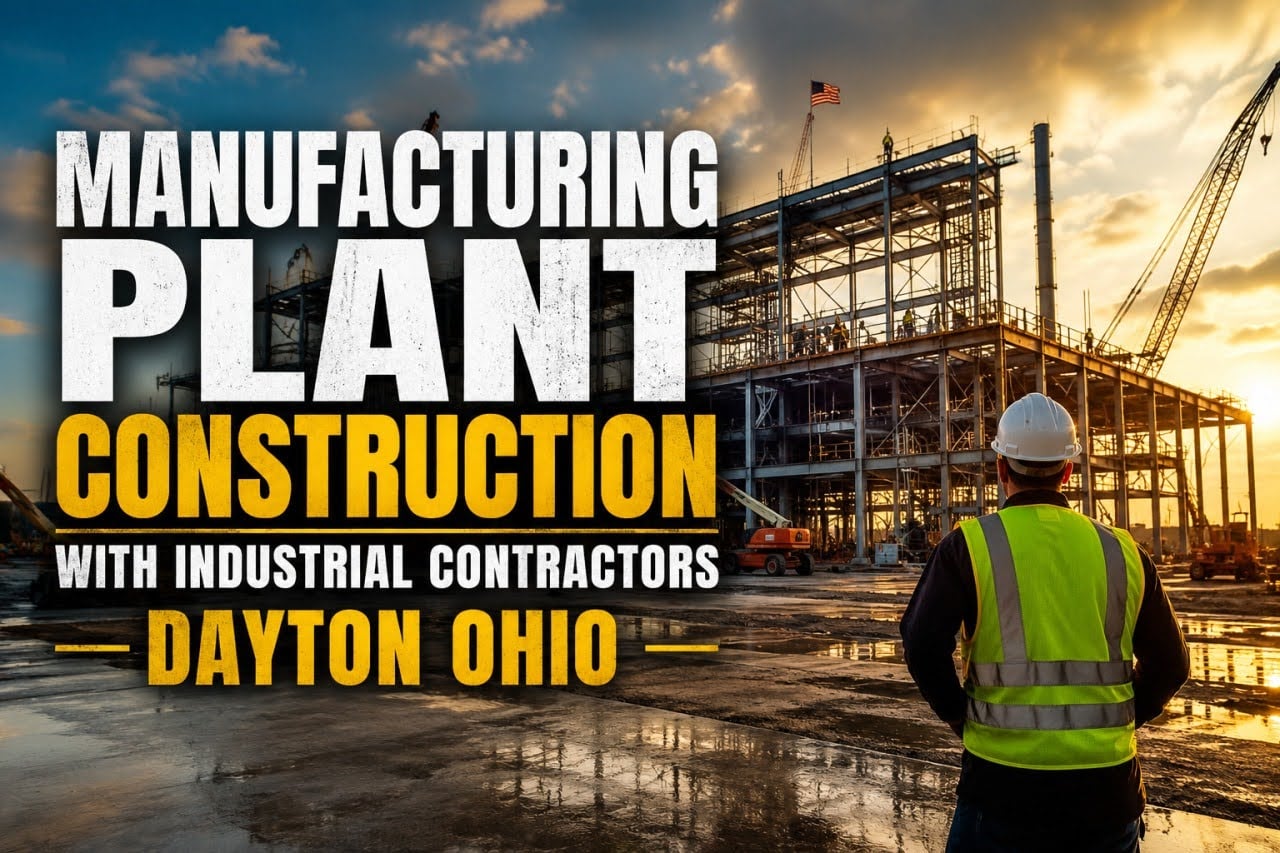
Manufacturing facilities are the backbone of industrial production, requiring durable construction, efficient layouts, and advanced infrastructure to support daily operations. Building a manufacturing plant is a complex process that demands careful planning, specialized expertise, and long-term strategic thinking.
That’s why businesses rely on experienced Industrial Contractors Dayton Ohio to manage manufacturing plant construction projects from start to finish. From site preparation to final installation, these contractors ensure facilities are built for productivity, safety, and future growth.
Let’s explore the key components of manufacturing plant construction and why professional industrial contractors are essential.
Strategic Site Planning and Development
Every successful manufacturing facility begins with proper site selection and planning.
This process includes:
- Evaluating land conditions and accessibility
- Planning utility connections and infrastructure
- Ensuring compliance with zoning and environmental regulations
Working with Industrial Contractors Dayton Ohio helps businesses establish a strong foundation before construction begins.
Efficient Facility Layout Design
Manufacturing plants must be designed for operational efficiency.
Layout planning focuses on:
- Optimizing workflow and production lines
- Creating efficient material movement paths
- Maximizing available floor space
A well-designed facility improves productivity and reduces operational bottlenecks.
Durable Structural Construction
Manufacturing environments place heavy demands on buildings and infrastructure.
Industrial contractors prioritize:
- Reinforced concrete foundations
- Durable steel framing systems
- Heavy-duty flooring for equipment and machinery
These construction methods ensure long-term durability and performance.
Advanced Utility and Mechanical Systems
Modern manufacturing facilities rely on sophisticated systems to operate effectively.
Construction projects often include:
- High-capacity electrical systems
- Industrial plumbing and compressed air systems
- Advanced HVAC and ventilation solutions
With Industrial Contractors Dayton Ohio, these systems are designed to meet the facility’s operational requirements.
Safety and Regulatory Compliance
Manufacturing plants must meet strict industry safety standards.
Contractors ensure compliance with:
- OSHA regulations
- Fire safety requirements
- Environmental and building codes
A focus on safety protects employees, equipment, and operations.
Space for Specialized Equipment
Manufacturing facilities often require custom accommodations for machinery and production systems.
This may include:
- Reinforced equipment pads
- High-clearance ceilings
- Dedicated production zones
Custom construction ensures equipment can operate safely and efficiently.
Energy Efficiency and Sustainability
Energy costs are a major consideration for manufacturing operations.
Modern construction solutions include:
- Energy-efficient lighting systems
- Improved insulation and ventilation
- Sustainable building materials and systems
These features help reduce long-term operating expenses.
Scalability for Future Expansion
Manufacturing businesses often grow and evolve over time.
Industrial contractors design facilities with:
- Expandable production areas
- Flexible layouts
- Infrastructure ready for future upgrades
With Industrial Contractors Dayton Ohio, facilities are built to support long-term business growth.
Efficient Project Management
Large industrial projects require strong coordination and oversight.
Professional contractors manage:
- Construction schedules and timelines
- Budget control and cost tracking
- Coordination between subcontractors and suppliers
This helps keep projects organized and on schedule.
Long-Term Value and Operational Performance
A professionally constructed manufacturing facility supports efficiency and profitability for years to come.
Benefits include:
- Improved workflow and production capacity
- Reduced maintenance and downtime
- Increased property and operational value
Investing in quality construction creates long-term advantages for manufacturers.
FAQs
What do Industrial Contractors Dayton Ohio specialize in?
They handle industrial construction projects including manufacturing plants, warehouses, and industrial facilities.
Why is facility layout important in manufacturing plants?
Efficient layouts improve productivity, workflow, and operational performance.
Can manufacturing plants be designed for future expansion?
Yes. Industrial contractors often create scalable designs that support future growth.
What systems are important in manufacturing facilities?
Electrical, HVAC, plumbing, ventilation, and production infrastructure are all essential.
Why is durability important in manufacturing construction?
Industrial environments place heavy demands on structures, requiring long-lasting materials and systems.
Final Thoughts
Manufacturing plant construction requires expertise, precision, and a deep understanding of industrial operations. From durable infrastructure to efficient layouts and advanced systems, every detail contributes to long-term productivity and success.
By partnering with experienced Industrial Contractors Dayton Ohio, businesses can ensure their manufacturing facilities are built for performance, safety, and future expansion. Whether constructing a new plant or expanding operations, professional industrial construction services provide the foundation for long-term operational success.