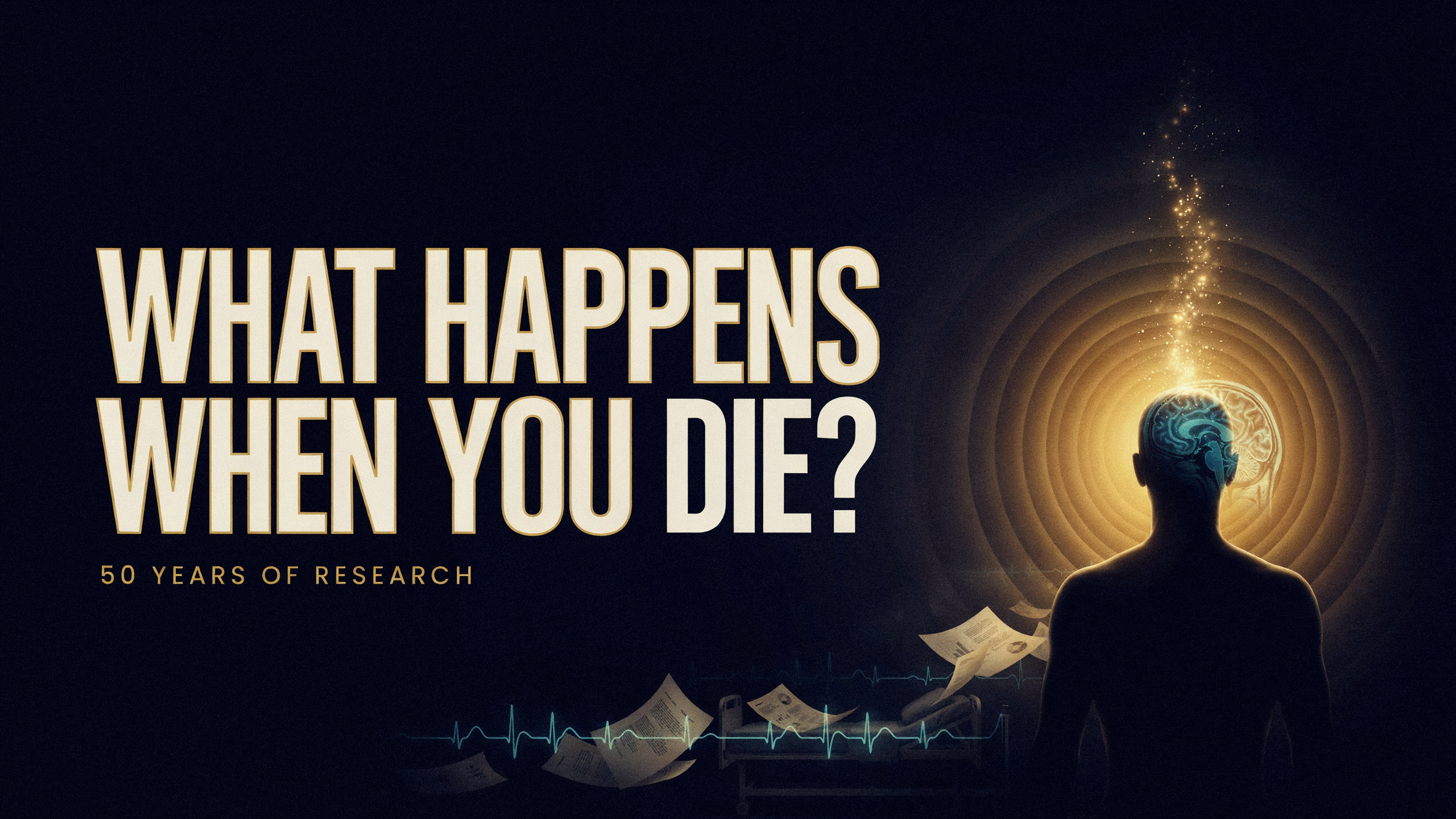
Consciousness is closely linked to coordinated brain activity, yet near-death experiences can seem vivid and profound. Neuroscience can explain how oxygen loss disrupts brain function, but it cannot establish what, if anything, is experienced after irreversible brain failure. Religious and philosophical traditions offer different interpretations, while scientific claims require independently verified evidence. Explore What Happens When You Die. Where does the evidence end—and what questions remain unresolved?
What Does Consciousness Mean?
Consciousness refers to the capacity for subjective experience: the ability to perceive, feel, think, and form a sense of self. Neuroscience often describes it through two related dimensions: wakefulness and awareness. Wakefulness concerns a brain’s level of arousal, while awareness involves the contents available to an individual, such as sensations, memories, emotions, and thoughts. Subjective awareness is the first-person quality of these contents: a sound is not merely processed but heard, and a feeling is experienced rather than only registered.
Conscious experience varies in clarity and intricacy. It can include attention to the surrounding world, inner reflection, or a sense of continuity across time. Researchers study it through reports, behavior, and physiological measures, while recognizing that no single measure fully captures private experience. These distinctions provide a careful vocabulary for discussing consciousness. They also acknowledge a shared human concern: how experience defines a person’s connection to self and others.
How Does the Brain Shape Consciousness?
How, then, does the brain shape conscious experience? Neuroscience links awareness to coordinated activity across neural networks, not a single control center. These networks process information, regulate attention, and connect perception with memory, emotion, and expectations. Their interactions help determine which signals become prominent and how experience is organized.
Sensory integration combines inputs from vision, hearing, touch, and other systems into a coherent representation of the surroundings and the body. When signals conflict or processing is disrupted, perception can change, illustrating how closely experience depends on brain function. Studies of sleep, anesthesia, brain injury, and stimulation likewise show that shifts in neural activity can alter awareness, its contents, or its continuity.
This evidence does not settle every philosophical question about consciousness. It does, however, provide a framework for examining how subjective experience relates to measurable biological processes. Because human brains share many organizational features, this research also offers a common basis for understanding how people experience and interpret the world.
What Happens to the Brain at Death?
At death, the brain’s activity changes as blood flow and oxygen delivery cease. Oxygen deprivation disrupts energy-dependent processes that let neurons maintain electrical gradients and communicate. Within seconds, organized activity associated with awareness can be impaired, though timing varies with circumstances and the brain’s condition.
As oxygen and glucose supplies fall, neurons lose the capacity to sustain normal signaling. Electrical patterns may become disorganized, and networks supporting perception, memory, and responsiveness no longer operate in their usual coordinated manner. This progression is not necessarily instantaneous or identical across individuals. Temperature, circulation, and the cause of the event can influence how quickly neural functions decline.
Researchers study these changes through clinical observations and brain-activity measurements, while recognizing that such measures cannot directly establish what a person experiences. Neural shutdown describes the progressive loss of coordinated function, not a single switch. Understanding this process clarifies the biological limits of consciousness without assuming every detail of subjective experience is settled.
What Is Brain Death?
Brain death is the permanent loss of all brain function, including the capacity for consciousness and the brainstem functions that support breathing and other vital reflexes. In the Whole brain standard, the diagnosis requires irreversible cessation of function throughout the brain, including the brainstem. It is distinct from coma, in which some brain activity remains, and from a vegetative state, in which sleep-wake cycles may persist.
Clinicians determine brain death through a structured examination. They establish an identifiable cause of catastrophic brain injury, exclude confounding factors such as sedative drugs or severe metabolic disturbance, and assess brainstem reflexes. These include pupil, corneal, and throat responses to stimulation. An apnea test evaluates whether breathing begins as carbon dioxide rises under controlled conditions. If parts of the examination cannot be completed safely, approved ancillary tests may assess cerebral blood flow or electrical activity.
Diagnostic criteria and procedures vary by jurisdiction, but they aim to establish the same permanent loss of integrated brain function using rigorous clinical evidence.
Can Consciousness Survive Brain Death?
Because brain death entails the permanent loss of all brain function, current neuroscience provides no established mechanism by which consciousness could continue after it is diagnosed. Research links conscious awareness to coordinated activity across brain networks, including systems involved in perception, memory, and attention. When these functions irreversibly cease, the neural processes associated with experience are no longer demonstrable.
Consequently, the possibility of consciousness persisting remains outside established scientific evidence. Mind-body dualism proposes that mind may exist independently of the brain, but this philosophical position has not yielded a testable account showing that personal awareness survives brain death. Neuroscience can describe how brain activity supports reported experience; it cannot confirm claims that awareness continues without functioning neural tissue.
For people considering this question, uncertainty may invite reflection without requiring a shared conclusion. Current evidence supports the view that consciousness depends on the living brain, while broader metaphysical interpretations remain matters of philosophical or religious belief rather than verified findings.
What Do Near-Death Experiences Feel Like?
Near-death experiences can include vivid sensations such as altered time perception, movement, or detachment from the body. Reports commonly describe calm or fear, though emotional responses vary among individuals. Neuroscience research examines how brain activity, physiological stress, and personal factors may shape these experiences.
Sensations During NDEs
What does a near-death experience feel like? Reports describe vivid sensory experiences and altered perception, but sensations vary by individual. Neuroscience research links these experiences to changes in brain function during crisis; their precise mechanisms remain uncertain. Commonly reported sensations include:
| Sensation | Possible neural context |
|---|---|
| Bright light | Visual-cortex activity |
| Tunnels or narrowing vision | Reduced peripheral processing |
| Floating or movement | Disrupted vestibular signals |
| Bodily distortion | Altered multisensory integration |
These accounts are subjective and cannot establish that awareness continues after death. Low oxygen, medication, stress, and memory reconstruction may contribute, though no single explanation fits every report. Researchers compare testimony with clinical data to distinguish shared patterns from individual interpretation. People report these experiences across backgrounds, but the details differ; careful study can acknowledge that variation without treating any account as universal. The sensations may feel compelling while remaining scientifically open to interpretation.
Common Emotional Experiences
Emotionally, near-death experiences often involve peace, fear, or a sense of detachment, though reports vary widely. Some people describe calm, acceptance, or reduced concern about dying; others report distress, confusion, or panic. These feelings can accompany changes in attention, memory, and bodily awareness during severe physiological stress. Neuroscience research links such experiences to processes involving oxygen levels, neurotransmitters, and brain networks that regulate emotion and self-perception, although no single mechanism explains every report.
Afterward, emotional effects may shape how people interpret the event and reconnect with others. Grief responses can arise when an experience follows a loss, while death anxiety may lessen, persist, or change in meaning. These reactions do not prove consciousness beyond death. They reflect reported experiences and their psychological significance, which can be discussed without dismissing those seeking understanding or belonging.
Individual Differences
Beyond broad emotional patterns, the form of a near-death experience varies substantially between individuals. Reports may include vivid imagery, altered time perception, or a sense of separation from the body, but no single feature is universal. Neuroscience research links such experiences to changes in brain function during extreme stress, including disrupted oxygen supply, memory processing, and sensory integration. These mechanisms may help explain variation without establishing what, if anything, follows death.
- Personality variations: Prior beliefs, emotional tendencies, and memory styles can shape how people interpret sensations and describe them later.
- Cultural influences: Religious imagery and shared narratives may provide familiar frameworks for organizing unusual perceptions.
- Neurological context: Medication, illness, and differences in brain activity can alter the experience’s intensity and content.
This diversity reflects human variation; no single report proves a universal account of consciousness.
How Does Science Explain Near-Death Experiences?
Near-death experiences are vivid reports of awareness during life-threatening crises, but neuroscience does not treat them as evidence that consciousness survives death. Researchers instead examine how brain processes under extreme stress may produce these experiences. Oxygen deprivation can disrupt perception and memory, while changes in blood flow, carbon dioxide levels, and neurotransmitter activity may alter awareness. Temporal lobe activity has also been associated with sensations such as presence, vivid memories, or unusual perceptions, though no single mechanism explains every report.
During cardiac arrest, the brain may retain some organized activity briefly, and recovery can include fragmented memories shaped by later interpretation. Medications, sleep-like states, and cultural expectations may also influence what people recall. These factors do not make reports unreal; they distinguish the experience’s personal meaning from claims about its cause. Studies face limitations, including difficulty measuring brain activity during emergencies and relying on retrospective accounts. For people comparing experiences, shared patterns can foster connection, while scientific explanations remain provisional and varied.
What Do End-of-Life Experiences Suggest?
End-of-life experiences, reported in the final days or hours of life, include visions, sensed presences, and vivid dreams that may comfort or unsettle patients. Hospice visions often feature deceased relatives, familiar settings, or journeys, and may help patients express emotion and maintain connection. Their occurrence does not, by itself, establish a supernatural cause.
Neuroscience offers several possible contributors, including medication effects, sleep disruption, oxygen changes, and altered activity in brain systems involved in memory, perception, and emotion. These factors may shape experiences, but available observations cannot explain every report. Researchers also note that patients’ cultural expectations and relationships can influence what they describe.
- Personal meaning: Experiences may reduce fear or support emotional preparation.
- Shared care: Listening without ridicule can strengthen trust among patients, families, and clinicians.
- Careful interpretation: Deathbed coincidences can feel significant, yet memory, timing, and selective reporting complicate assessment.
Together, such accounts reveal meaningful changes in perception near death, while leaving their ultimate interpretation open to investigation.
What Evidence Might Show Consciousness Survives Death?
To assess whether consciousness survives death, researchers would need evidence that verifiable awareness persists after brain function has irreversibly ceased. The central challenge is distinguishing such awareness from residual neural activity, memory distortion, and reports shaped by expectation. A strong study would document specific information unavailable through ordinary sensory channels, then verify it independently against records or concealed targets. Timing would also matter: researchers would need reliable measures showing that the reported perception occurred after circulation and brain activity had stopped, not during a period of impaired but continuing function.
Current monitoring cannot establish that every neuron has ceased activity, and clinical death is not identical to irreversible brain death. This limits claims based on near-death accounts. A verifiable medium, such as a prospectively hidden image, could make testing more rigorous, though replication and controls would remain necessary. Postmortem evidence would need to be reproducible, independently assessed, and consistent with known limits of measurement. Until then, neuroscience cannot confirm survival beyond death.
How Do Religions View Consciousness After Death?
Religious traditions offer diverse accounts of consciousness after death, but these are theological claims rather than conclusions established by neuroscience. Their teachings place death within shared systems of meaning, ritual, and community, helping people interpret loss and maintain bonds with the deceased.
- Some traditions describe an enduring soul or personal identity that enters an afterlife. These accounts offer continuity, though neuroscience has not identified a mechanism by which subjective experience persists after brain function ends.
- Reincarnation beliefs propose that life or consciousness continues in another form. Traditions differ on what carries forward, and such claims are not equivalent to experimentally verified memory transfer.
- Other communities honor ancestral spirits, understood as continuing relationships between the living and the dead. These practices can support belonging and grief, while their spiritual explanations remain distinct from measurable neural processes.
Across religions, accounts vary in detail and authority. Neuroscience can study how beliefs shape perception, memory, and coping, but it cannot confirm or disprove theological claims about postmortem awareness.
How Do Philosophers View Survival After Death?
Philosophers assess survival after death by asking what would need to persist for a person to remain the same individual. The debate about personal identity includes competing accounts of what makes someone continuous over time. Some emphasize psychological features, such as memories, intentions, and character; others stress bodily continuity or the persistence of a living brain. Neuroscience shows that changes to brain systems can alter memory, emotion, and self-awareness, linking ordinary personal continuity closely to brain function.
Philosophical dualism proposes that mind and body are distinct, allowing the possibility that a nonphysical mind could survive bodily death. However, this proposal depends on explaining how such a mind retains memories and personality without the neural processes associated with them. Physicalist views, by contrast, generally treat consciousness as dependent on brain activity, making survival after irreversible brain failure difficult to support within that framework. Philosophers consequently distinguish logical possibility from evidence: a coherent account of survival must specify what persists and how it preserves the features by which people recognize one another.
Why Is Consciousness After Death Hard to Test?
Testing consciousness after death is difficult because irreversible death eliminates the brain activity that current methods use to detect conscious states. Neuroscience links reportable awareness to coordinated neural processes, measured through electrical signals, imaging, and behavioral responses. Once these signals cease, researchers lose the instruments needed to distinguish experience from its absence.
- Experimental limitations: Studies of cardiac arrest can examine brief periods of reduced circulation, but these events are not equivalent to irreversible death. Reports gathered after resuscitation may be affected by memory formation, medication, and oxygen deprivation, making their timing difficult to establish.
- Ethical constraints: Researchers cannot deliberately cause irreversible death to test for awareness. Clinical studies must prioritize patient safety, consent, and care, limiting the conditions that can be observed.
- Measurement gaps: No validated method detects subjective experience independently of brain function. When available, neural recordings reveal activity patterns, not experience itself.
These constraints shape what researchers can investigate while respecting patients and the communities seeking careful, compassionate inquiry.
What Can We Conclude About Consciousness After Death?
Given the limits of current methods, evidence does not establish whether consciousness persists after irreversible death. Neuroscience links conscious experience to coordinated brain activity, including communication among cortical and subcortical networks. When circulation stops, oxygen deprivation disrupts these processes; after irreversible loss of brain function, established measures detect no capacity for awareness. This supports the conclusion that consciousness, as studied clinically, depends on a functioning brain, but it cannot settle every claim about existence beyond measurable biology.
Reports of near-death experiences can be examined as experiences occurring around serious illness or recovery. Their vividness is meaningful to those who have them, yet they do not demonstrate awareness after permanent brain failure. Unresolved questions remain about how consciousness arises and how such reports relate to brain states. Personal beliefs may offer interpretations, while scientific conclusions remain bounded by testable evidence. A careful account recognizes both those limits and the shared human interest in understanding death, without presenting uncertainty as proof of survival or its impossibility.
—————————
Current evidence links consciousness to coordinated brain activity, which fails irreversibly in brain death. Vivid near-death and end-of-life experiences may be significant to those who report them, but they do not establish awareness after permanent loss of brain function. Religious and philosophical accounts offer interpretations beyond neuroscience, not scientifically verified conclusions. Testing survival would require independently confirmed perception after brain function ceased. For more, read What Happens When You Die. Until such evidence exists, consciousness beyond death remains an open question, not an established finding.