
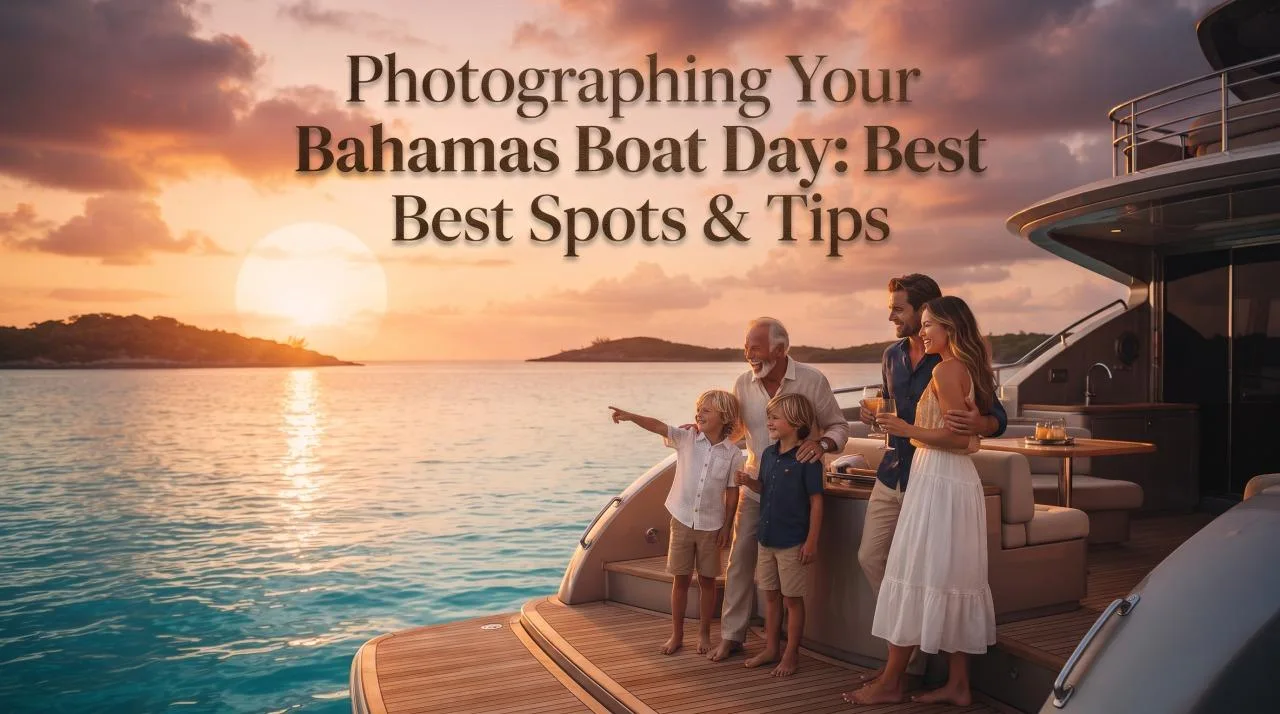
A day on the water in the Bahamas offers countless opportunities to capture memorable photographs. From turquoise shallows and white-sand beaches to secluded coves and colorful marine life, the scenery provides a beautiful backdrop for everything from casual vacation snapshots to carefully composed travel photography.
However, photographing a boat day is a little different from taking pictures on land. The boat is constantly moving, sunlight reflects off the water, and changing weather conditions can affect exposure and image quality. You may also have limited time at certain locations, especially when visiting several islands or beaches during a single excursion.
With a little preparation, you can capture photographs that reflect the atmosphere of your experience without spending the entire trip behind a camera. The key is knowing which locations offer the best scenery, choosing the right time for photographs, and understanding how to work with the conditions on the water.
Why the Bahamas Is a Beautiful Destination for Boat Photography
The Bahamas is known for its distinctive combination of shallow turquoise water, bright beaches, tropical vegetation, and scattered islands. These features create natural contrasts that make photographs visually interesting even without complicated equipment.
Water color is one of the most recognizable elements of the scenery. Depending on the depth, sunlight, and seabed, the ocean can appear pale aqua, bright turquoise, deep blue, or a mixture of several shades. Photographing these transitions from a boat can create particularly striking images.
The surrounding landscape also offers plenty of variety. Some areas feature long stretches of sand, while others have rocky shorelines, mangroves, or small islands surrounded by shallow water. This means a single excursion can produce photographs with very different moods and compositions.
Another advantage is that boat trips provide perspectives that are difficult to capture from shore. You can photograph beaches from offshore, frame islands against open water, and capture the boat itself as part of the scenery.
Best Spots to Photograph During a Bahamas Boat Day
The best photographic locations depend on your itinerary, the islands you visit, and the type of experience you want to document. Some places are especially appealing for wide scenic photographs, while others offer opportunities for portraits, wildlife pictures, and close-up details.
The Exuma Cays and Their Turquoise Waters
<AsyncImage query=”Exuma Bahamas aerial turquoise water sandbars boat tropical islands” aspectRatio=”16:9″ width=”100%”/>
The <Entity value=”Exuma Cays” category=”place” disambig=”Island chain in the Bahamas”/> are among the most visually recognizable areas of the Bahamas. Their shallow sandbars, clear water, and scattered islands create beautiful compositions from both the boat and the shoreline.
One of the best ways to photograph this area is to look for changes in water color. Instead of pointing your camera directly toward the horizon, try composing an image that includes both the shallow water in the foreground and deeper blue water farther away.
Aerial-style photographs can be especially effective when taken from a safe elevated position or with a drone where permitted. These images reveal the shapes of sandbars and the contrast between different depths.
If your itinerary includes a stop on a beach, take a few photographs from the water looking back toward the shoreline. This perspective can capture the sense of isolation and open space that makes the Exumas so appealing.
Nassau’s Coastline and Nearby Islands
<AsyncImage query=”Nassau Bahamas coastline aerial view turquoise ocean boats” aspectRatio=”16:9″ width=”100%”/>
A boat day departing from <Entity value=”Nassau” category=”city” disambig=”Capital of the Bahamas”/> offers plenty of opportunities to photograph the coastline, nearby islands, and changing ocean scenery.
Photographs taken while leaving the harbor can help tell the story of the excursion. Capture the shoreline as the boat moves away, then look for opportunities to photograph distant islands and the open water.
The area around <Entity value=”Paradise Island” category=”place” disambig=”Island near Nassau, Bahamas”/> can also provide interesting compositions, particularly when you want to include recognizable coastal scenery in your vacation pictures.
For more natural-looking images, try moving away from crowded backgrounds when possible. A photograph with open water, a clean horizon, and a small section of coastline can often communicate the feeling of a private escape better than a busy harbor scene.
Pig Beach and Its Surroundings
<AsyncImage query=”Big Major Cay Pig Beach Exuma Bahamas swimming pigs turquoise water” aspectRatio=”16:9″ width=”100%”/>
One of the most famous photographic experiences in the Bahamas is visiting Pig Beach at <Entity value=”Big Major Cay” category=”place” disambig=”Island in the Exuma Cays, Bahamas”/>.
The swimming pigs create unusual and memorable photographs, but capturing them well requires patience and awareness of your surroundings.
Try photographing the animals from a respectful distance and avoid crowding them or encouraging unsafe interactions. A wider composition that includes the pigs, beach, and surrounding water can tell a more complete story than a close-up alone.
If you want pictures of people interacting with the scenery, wait for a moment when the background is relatively clear. This helps keep attention on the subject rather than on other visitors or boats.
Always follow the guidance of your captain or local tour operator regarding animal interactions and feeding.
Sandbars and Secluded Beaches
<AsyncImage query=”Exuma Bahamas white sandbar turquoise shallow water tropical beach” aspectRatio=”16:9″ width=”100%”/>
Sandbars are among the most photogenic stops during a Bahamas boat excursion. Their bright white sand and shallow water create a minimalist setting that works well for portraits, group pictures, and landscape photography.
For a more interesting composition, avoid placing every subject directly in the center of the frame. Position people slightly to one side and allow the water or shoreline to create a natural leading line.
Photographs taken from the boat can also show the full shape of a sandbar and the surrounding water. If the boat is anchored nearby, include part of it in the composition to establish a sense of scale.
The appearance of a sandbar can change with tides and weather conditions, so the exact scenery may differ between visits.
The Best Time of Day for Boat Photography
Lighting can make a major difference in how your photographs look. Even a beautiful location can appear less impressive when harsh sunlight creates strong shadows or bright reflections.
Morning Light
Morning is often a good time for scenic photography. The light can be softer than it is around midday, and the water may appear especially clear when the sun is positioned favorably.
It is also a useful time to photograph the boat, passengers, and coastline before the day becomes too bright. If your excursion starts early, capture a few photographs as the boat leaves the harbor and the surrounding scenery begins to open up.
Midday Sunlight
Midday offers bright, vivid colors, which can be excellent for showing the intense blues and turquoise shades of the Bahamas.
However, direct sunlight can create harsh contrast. Faces may have strong shadows, and reflections from the water can make parts of an image appear overly bright.
When taking portraits, look for shaded areas on the boat or position people so that the sunlight does not fall directly into their eyes. For landscape photographs, pay attention to reflections and avoid overexposing the brightest parts of the water.
Late Afternoon and Golden Hour
<AsyncImage query=”Bahamas boat sunset golden hour ocean silhouette yacht photography” aspectRatio=”16:9″ width=”100%”/>
Late afternoon can provide some of the most atmospheric photographs of a boat day. The sunlight becomes warmer, shadows soften, and the horizon may take on golden or pink tones.
This is an excellent opportunity for photographs of the boat, passengers, and surrounding islands. Silhouettes can also work well when the sun is low and positioned behind the subject.
If your excursion includes a late return or sunset cruise, save some camera battery and storage for this part of the experience. The changing light can create photographs that look very different from those taken earlier in the day.
Practical Camera and Phone Tips for Better Pictures
You do not need professional photography equipment to capture attractive images during a Bahamas boat trip. A modern smartphone can produce excellent results when used thoughtfully.
The most important thing is to understand how movement, sunlight, and water reflections affect your photographs.
Keep Your Horizon Straight
A tilted horizon can make an otherwise beautiful ocean photograph look unbalanced.
Most smartphones have a grid option in their camera settings. Turning it on can help you keep the horizon level and compose images more consistently.
If you are photographing the boat from another position, use the horizon as a reference point rather than relying entirely on the boat’s angle.
Tap to Focus and Adjust Exposure
Bright water and reflective surfaces can confuse automatic exposure settings. Your camera may make the scene too dark or overexpose the brightest areas.
Tap the main subject on your phone screen to set focus. If the image looks too bright, lower the exposure slightly before taking the photograph.
This is particularly useful when photographing people against a bright beach or when the sun is reflecting strongly off the water.
Use Burst Mode for Moving Subjects
Boats, waves, and wildlife rarely remain perfectly still. Burst mode allows you to capture several images in quick succession, increasing the chance of getting a sharp photograph at the right moment.
It can be especially helpful when photographing people jumping into the water, dolphins moving near the boat, or passengers enjoying an activity.
Review the images later and keep the strongest ones rather than trying to select a perfect frame while the boat is moving.
Avoid Excessive Digital Zoom
Digital zoom can reduce image quality, particularly when lighting conditions are challenging.
Whenever possible, move closer to your subject if it is safe and appropriate. Otherwise, take the photograph at the standard camera setting and crop it afterward.
A wider photograph can also be more useful because it captures the surrounding scenery and gives you additional flexibility when editing.
Protecting Your Camera and Phone on the Water
A boat environment creates risks that are easy to underestimate. Water splashes, sunscreen, sand, and accidental drops can damage expensive equipment.
Before leaving the dock, prepare a simple protection setup.
Consider bringing:
- A waterproof phone pouch with a secure closure.
- A floating phone strap or wrist lanyard.
- A microfiber cloth for cleaning camera lenses.
- A protective case for your phone or camera.
- A dry bag for equipment when it is not being used.
- A portable power bank if your excursion lasts several hours.
Test waterproof pouches before the trip rather than assuming they are reliable. A quick check at home can help identify damaged seals or closures.
Avoid changing lenses or opening camera compartments in areas where water may splash. If your equipment gets wet, follow the manufacturer’s instructions for drying it rather than immediately charging or powering it on.
Also remember that saltwater can leave residue on equipment. Wipe down suitable exterior surfaces carefully after the excursion, following the device manufacturer’s cleaning recommendations.
Composition Ideas for More Interesting Bahamas Boat Photos
Good photographs are not only about choosing beautiful locations. The way you arrange subjects within the frame can make a major difference.
Include the Boat in the Landscape
Instead of photographing only the water and horizon, include part of the boat in the foreground. A railing, bow, or section of the deck can create depth and show that the image was taken during an excursion.
This also helps distinguish your photographs from generic beach pictures.
Capture People Enjoying the Experience
Some of the most memorable travel photographs show genuine moments rather than carefully posed portraits.
Capture friends laughing, passengers relaxing on the deck, someone preparing to swim, or a group enjoying a beach stop. These images help communicate the atmosphere of the trip.
For group photographs, try to position everyone where the light is relatively even and the background is not overly distracting.
Look for Reflections and Patterns
The surface of the water can create interesting visual details. Reflections of boats, clouds, and nearby islands can add variety to your photo collection.
You can also photograph the patterns created by waves, shallow sand, and sunlight. These close-up images work well as complementary photographs between larger landscape shots.
Take Both Vertical and Horizontal Photos
Horizontal photographs are useful for showing wide landscapes, coastlines, and the full boat. Vertical photographs are often better for portraits, social media stories, and images that emphasize a person against the scenery.
Rather than choosing one orientation for the entire trip, capture important moments in both formats.
Planning Your Boat Excursion Around Photography
If taking pictures is an important part of your vacation, consider the itinerary when choosing your boat experience.
Different excursions provide different photographic opportunities. A trip focused on island stops may offer more time for beach portraits and scenic landscapes, while a wildlife-focused excursion may provide more opportunities for close-up action shots.
When researching bahamas boat photography opportunities, think about the locations you want to visit, the amount of time available at each stop, and whether the boat provides comfortable places to take pictures.
A few questions can help you plan:
- Does the itinerary include beaches, sandbars, or scenic islands?
- Will there be enough time to take photographs at each stop?
- Does the boat have shaded areas for protecting equipment and taking portraits?
- Are there opportunities to photograph the coastline from the water?
- Does the captain know which locations offer particularly attractive scenery?
A private charter may provide more flexibility than a fixed group excursion, especially if you want to spend additional time at a particular beach or wait for better lighting. However, the best option depends on your budget, schedule, and preferred activities.
It is also worth discussing photography plans with the captain before departure. They may be able to suggest scenic stops or adjust the order of certain activities when conditions allow.
Respecting the Environment While Taking Pictures
The Bahamas’ natural scenery is a major part of its appeal, and responsible photography helps protect it.
Avoid standing on coral, disturbing marine life, or leaving personal belongings and trash on beaches. When photographing wildlife, maintain a respectful distance and follow local guidance.
If you are considering using a drone, check applicable regulations and restrictions before your trip. Some locations may have rules concerning drone flights, wildlife, private property, or protected areas. Never assume that drone use is permitted simply because a location appears remote.
Be equally careful when taking photographs from the boat. Do not lean dangerously over railings or move into restricted areas to get a better angle. A memorable photograph is never worth risking your safety.
FAQs
What is the best camera for a Bahamas boat trip?
A modern smartphone is sufficient for most vacation photography. If you prefer a dedicated camera, choose a model that is easy to handle and has appropriate weather protection. Whatever device you use, prioritize secure storage and protection from water.
What time of day is best for photographing the Bahamas?
Morning and late afternoon often provide softer, more flattering light. Midday can still produce vivid ocean colors, but direct sunlight may create harsh shadows and strong reflections.
How do I photograph turquoise water without overexposing it?
Tap the screen to focus and adjust exposure if the water looks too bright. Avoid excessive zoom and try different angles to reduce unwanted reflections. A polarizing filter can also help reduce glare when used with compatible camera equipment.
Should I bring a waterproof phone case on a boat excursion?
Yes. A waterproof pouch or case provides an additional layer of protection against splashes and accidental exposure to water. A floating strap is also useful because it can help prevent your phone from sinking if it slips from your hand.
Can I use a drone to photograph the Bahamas?
Drone use depends on local regulations, location-specific restrictions, and applicable aviation requirements. Check the rules before flying and follow all safety and environmental guidelines. Some beaches, resorts, and protected areas may restrict drone activity.
Are private boat charters better for photography?
They can be, particularly when flexibility and time at specific locations are important. A private charter may allow you to spend longer at a scenic beach or adjust the itinerary when conditions permit. However, shared excursions can also provide excellent photographic opportunities.
Conclusion
A Bahamas boat day offers an exceptional variety of photographic opportunities, from the turquoise waters of the Exuma Cays to secluded beaches, colorful coastlines, and unforgettable moments with friends and family.
Capturing these experiences does not require expensive equipment or advanced photography skills. Understanding natural light, choosing interesting compositions, protecting your camera, and planning your itinerary can make a noticeable difference in the final results.
Most importantly, remember to enjoy the experience rather than trying to photograph every moment. Take time to appreciate the scenery, participate in the activities, and capture the memories that matter most. The best photographs will be the ones that bring you back to the feeling of being out on the beautiful waters of the Bahamas.