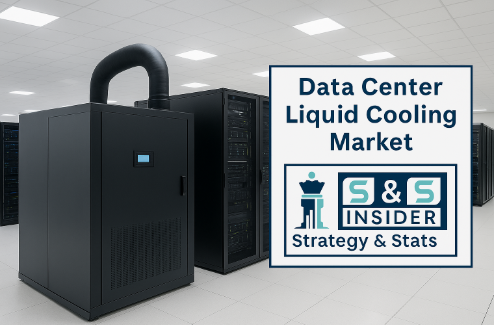
The global data center liquid cooling market, valued at USD 3.63 Billion in 2024, is projected to reach an impressive USD 17.28 Billion by 2032, expanding at a CAGR of 21.54% from 2025 to 2032. This rapid growth reflects a major transformation in how modern data centers tackle rising heat loads, energy consumption challenges, and sustainability targets. As AI, machine learning, and cloud-based applications intensify computational demands, traditional air-cooling systems are increasingly insufficient. Liquid cooling has emerged as a superior technology, offering significant performance, efficiency, and environmental benefits that align with the digital infrastructure needs of the future.
Across the globe, hyperscale operators are leading the adoption curve. Technology giants such as Microsoft, Google, and Meta have already integrated advanced liquid cooling systems to support the massive thermal output of AI and HPC servers. These organizations demonstrate how liquid cooling not only improves heat dissipation but also substantially reduces electricity usage, enabling data centers to achieve lower Power Usage Effectiveness (PUE). The shift toward carbon-neutral data center operations is further accelerating the move from legacy cooling strategies to innovative liquid-based designs.
Transforming Thermal Management Through Innovation and Sustainability
The data center liquid cooling market is being reshaped by the rising focus on energy efficiency, operational sustainability, and scalable high-density deployment. Enterprises worldwide are under pressure to reduce carbon footprints and optimize power consumption. Liquid cooling systems enable them to address both goals by cutting energy usage by up to 30% compared to traditional cooling. These solutions also allow data centers to pack more compute power into smaller spaces, allowing high-density racks to operate safely and efficiently.
Rapid advancements in materials, immersion cooling fluids, and coolant distribution architectures are driving new possibilities in system design. The industry is transitioning from basic cold plates toward sophisticated full-rack immersion cooling and hybrid cooling architectures, which combine air and liquid systems for maximum effect. As artificial intelligence workloads continue to escalate, liquid cooling technologies are positioned to become the backbone of next-generation server environments.
However, the market also faces notable challenges. Retrofitting older facilities with liquid cooling systems often requires significant capital expenditure and infrastructure modifications. Many legacy data centers were not built with liquid loops, coolant distribution units, or immersion tanks in mind, making integration complex. Maintenance requirements for liquid cooling systems also demand specialized expertise. Despite these barriers, long-term financial and environmental benefits continue to outweigh the initial concerns for most operators.
Key Drivers & Restraints Influencing Market Expansion
The primary driver shaping the expansion of the data center liquid cooling market is the exponential rise in AI, machine learning, and high-performance computing workloads. These applications generate extreme heat loads that air cooling alone cannot manage. Cloud data center expansion, ongoing digital transformation, and the rapid deployment of hyperscale facilities further support market acceleration. The industry’s commitment to energy efficiency and lower PUE metrics has intensified the focus on liquid cooling as a critical enabler of greener operations.
Despite its advantages, the market faces restraints such as high upfront investment, complex retrofitting processes, and operational risks associated with liquid handling in data centers. These challenges may slow adoption among small and medium-sized enterprises. Even so, increasing awareness, continued innovation, and drop-in liquid cooling designs are expected to ease integration barriers.
Key Opportunities & Challenges Shaping the Future Landscape
The data center liquid cooling market holds vast opportunities driven by the expansion of edge data centers, 5G networks, and real-time processing needs. Edge facilities require compact, efficient cooling solutions due to limited space, making liquid cooling an ideal fit. The growth of immersion cooling is creating opportunities for data centers to support extremely high compute densities while reducing operational costs and environmental impact. Direct-to-chip solutions are also gaining traction, offering precision cooling for processors running heavy AI and HPC workloads.
Challenges persist in terms of standardization, coolant compatibility, leakage prevention, and long-term reliability. Developing globally accepted standards for immersion fluids, cooling distribution units, and safety protocols remains critical. Yet ongoing R&D is paving the way for more robust designs. As operators prioritize sustainability and operational optimization, these challenges will gradually diminish.
Market Segmentation Expands Across Components, Cooling Types, and Applications
The data center liquid cooling market spans a diverse range of segments, beginning with components that include solution-based systems and services that support installation, monitoring, and maintenance. Cooling types include room-based cooling, rack-based cooling, and row-based cooling, each serving varying density levels and facility designs.
The market’s application landscape covers enterprise data centers, colocation facilities, wholesale environments, and hyperscale data centers. Adoption is particularly strong among hyperscale operators that require efficient thermal management for next-gen computing clusters. Industry verticals driving demand include BFSI, IT & telecom, manufacturing, media & entertainment, retail, defense, healthcare, energy, and more—each relying heavily on uninterrupted data processing.
Global Regional Trends Reflect Uneven Yet Accelerating Adoption
North America remains the dominant region in the data center liquid cooling market due to the presence of major hyperscale and cloud providers. Europe follows closely, supported by stringent environmental regulations and sustainability commitments. Asia-Pacific, led by China, India, Japan, and South Korea, is experiencing exponential growth fueled by rapid industrialization, cloud expansion, and the surge in AI research. The Middle East & Africa and Latin America are emerging markets where digital transformation and new data center builds are driving adoption.
Competitive Landscape Featuring Leading Cooling Innovators
Major players shaping the data center liquid cooling market include Schneider Electric, Vertiv Group, Asetek, CoolIT Systems, Rittal GmbH, Fujitsu Limited, Submer, Iceotope Technologies, Nortek Air Solutions, Midas Green Technologies, Green Revolution Cooling (GRC), Chilldyne, Huawei Technologies, Dell Technologies, Supermicro, Lenovo, LiquidStack, and IBM Corporation. These companies are continuously innovating to offer energy-efficient, scalable, and modular cooling solutions tailored to AI and cloud-driven environments.
Future Outlook
The future of the data center liquid cooling market is poised for strong expansion as hybrid cooling systems, modular immersion tanks, and sustainable cooling liquids become mainstream. The rising emphasis on carbon-neutral operations, combined with the escalating demand for high-density compute, ensures liquid cooling will transition from a premium option to a standard infrastructure component worldwide.
Conclusion
As digital infrastructure evolves, the data center liquid cooling market stands at the epicenter of innovation. With unmatched efficiency, performance scalability, and environmental benefits, liquid cooling is redefining the thermal management paradigm for AI-driven and cloud-enabled data centers. Its rapid adoption reinforces its position as a foundational technology shaping the future of global computing.