
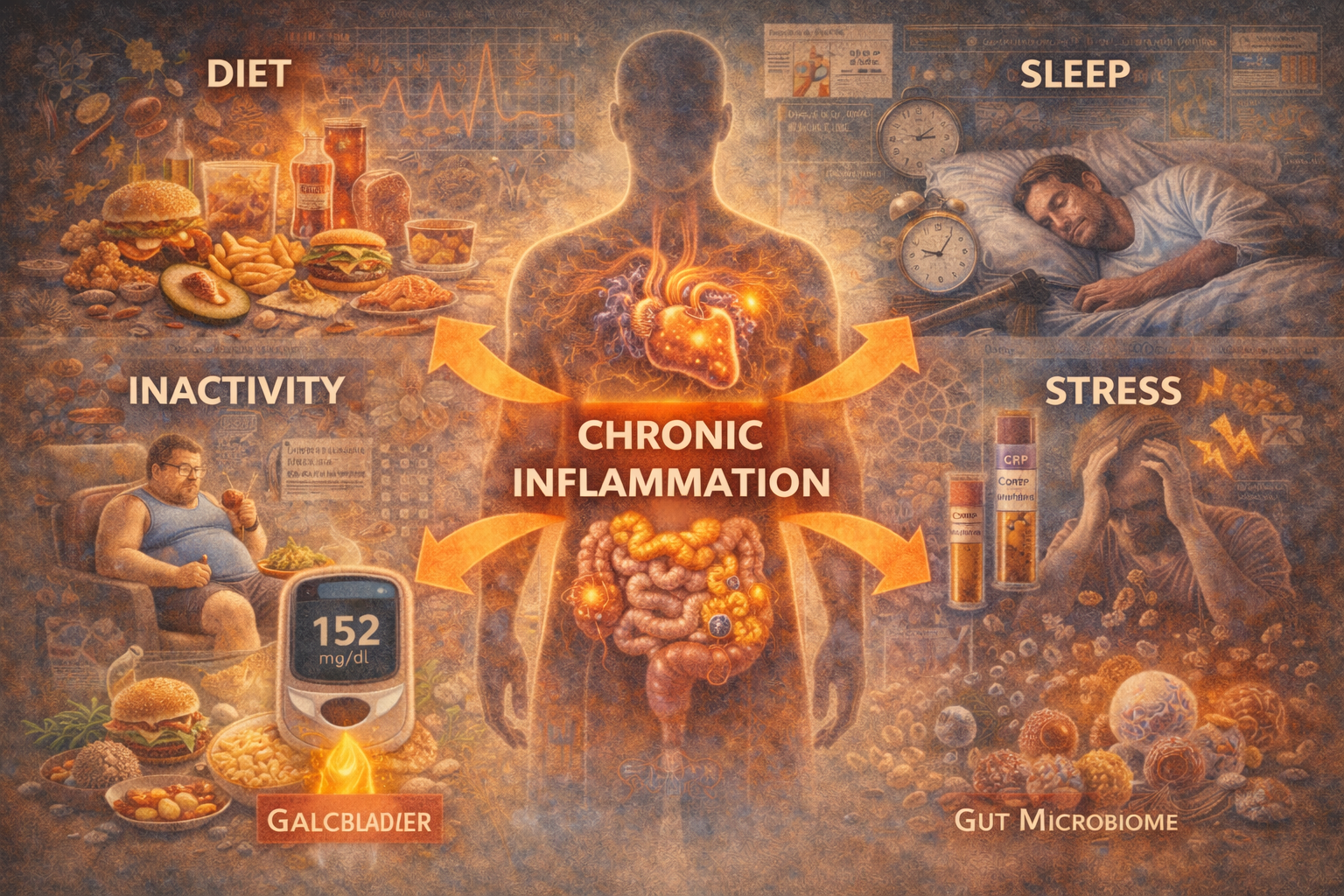
Inflammation is often framed as a problem that appears only when something goes wrong. It is associated with injury, infection, or visible illness, and once the threat resolves, inflammation is expected to subside. This model works well for acute inflammation, the short-term immune response that protects and repairs tissues. However, it does not explain a growing category of inflammatory states that persist quietly over years without clear external triggers.
Chronic low-grade inflammation has emerged as a defining feature of many modern health conditions. Unlike acute inflammation, it operates below the threshold of pain or obvious symptoms, yet it continuously influences metabolism, immunity, and tissue function. Increasingly, researchers describe this form of inflammation not as a disease in itself, but as a lifestyle-driven condition shaped by long-term environmental and behavioral factors.
Understanding chronic inflammation requires shifting attention away from isolated pathogens or injuries and toward the cumulative effects of modern living.
The Difference Between Acute and Chronic Inflammation
Acute inflammation is a rapid, targeted response. Immune cells mobilize, inflammatory molecules increase, and damaged tissue is repaired. Once the threat is neutralized, inflammatory signals subside, and the system returns to baseline.
Chronic low-grade inflammation is fundamentally different. It involves persistent activation of inflammatory pathways at low intensity, often without a clear initiating event. Immune signaling remains elevated, but not enough to trigger classic inflammatory symptoms such as swelling or pain.
This form of inflammation does not resolve on its own. Instead, it becomes part of the body’s baseline physiological state, influencing cellular behavior, hormone signaling, and metabolic regulation over time.
Why Chronic Inflammation Is Increasing
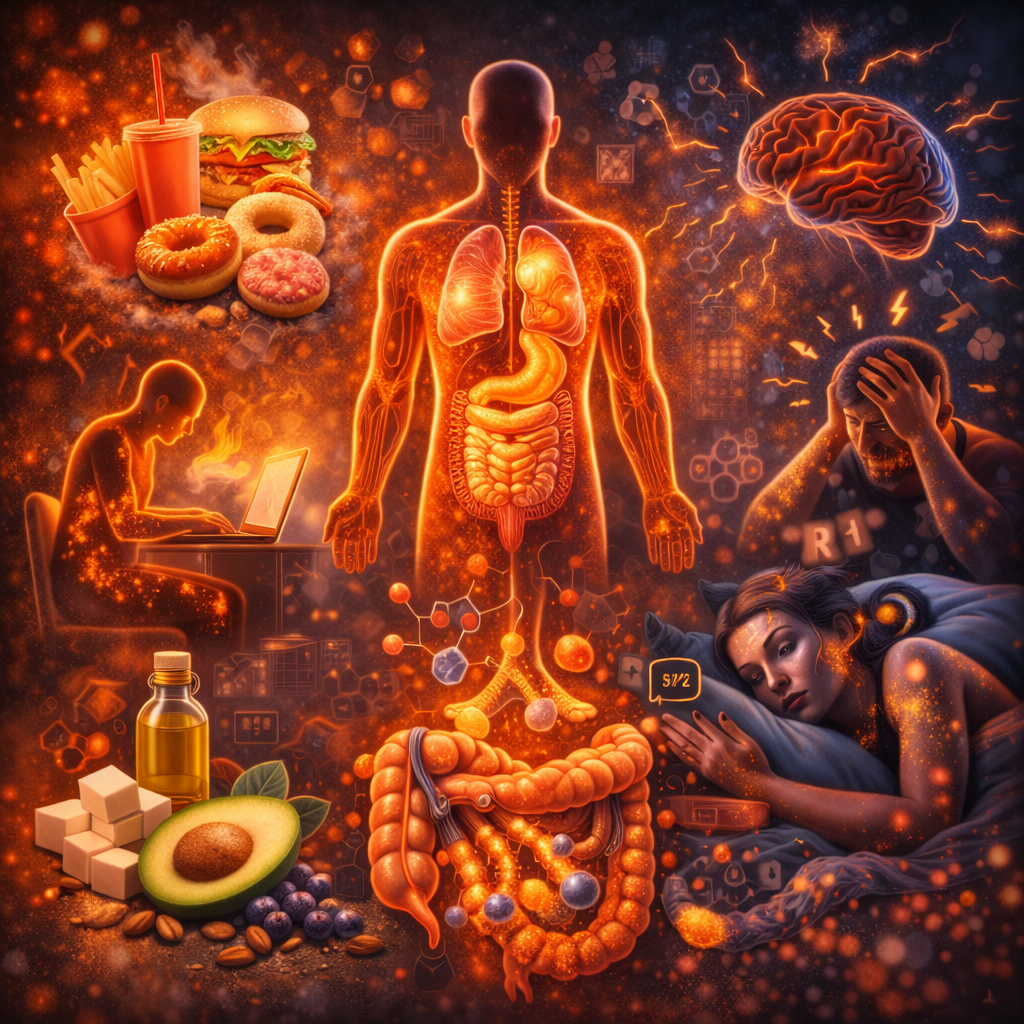
The rise of chronic low-grade inflammation closely mirrors changes in lifestyle over the past century. Diets, activity patterns, sleep habits, and stress exposure have all shifted in ways that continuously stimulate inflammatory pathways.
Unlike acute infections or injuries, these stimuli are not intermittent. They are persistent. The immune system adapts by remaining partially activated, creating a state of constant readiness that gradually becomes maladaptive.
Researchers increasingly describe chronic inflammation as a mismatch between human biology and modern environments rather than the result of a single pathological cause.
Diet as a Primary Inflammatory Signal
Among the most consistent chronic inflammation causes identified in research is diet composition. Diets high in refined carbohydrates, added sugars, industrial seed oils, and ultra-processed foods promote repeated metabolic stress.
Rapid glucose absorption triggers insulin release and oxidative stress. Excess fatty acids from processed oils can activate inflammatory signaling pathways. Over time, these repeated exposures create a biochemical environment that favors inflammation even in the absence of infection.
Importantly, chronic inflammation can develop without overt obesity. Individuals may consume sufficient calories yet still experience inflammatory signaling due to nutrient imbalance and metabolic strain.
The National Institutes of Health has discussed how dietary patterns influence inflammatory markers, noting that inflammation often reflects dietary quality rather than caloric intake alone.
Insulin Resistance and Inflammatory Feedback Loops
Insulin resistance plays a central role in sustaining chronic inflammation. When cells become less responsive to insulin, glucose and fatty acids remain elevated in circulation. These excess fuels activate immune pathways and increase production of inflammatory cytokines.
Inflammation, in turn, further disrupts insulin signaling. This creates a feedback loop in which metabolic dysfunction and inflammation reinforce one another.
This relationship helps explain why chronic inflammation is so closely linked to metabolic conditions such as type 2 diabetes, fatty liver disease, and cardiovascular disease. Inflammation is not simply a consequence of these conditions. It is an active participant in their progression.
Sedentary Behavior and Immune Activation
Physical inactivity is another major contributor to low-grade inflammation. Muscle contraction has anti-inflammatory effects that extend beyond energy expenditure. Active muscle tissue releases signaling molecules that help regulate immune responses and glucose metabolism.
When movement is absent, these regulatory signals diminish. Inflammatory markers increase, even in individuals who maintain normal body weight. Prolonged sitting has been associated with elevated inflammatory markers independent of exercise habits, suggesting that inactivity itself acts as an inflammatory stimulus.
This highlights why inflammation is increasingly viewed as a lifestyle pattern rather than a static condition.
Sleep Disruption and Inflammatory Load
Sleep plays a critical role in immune regulation. During deep sleep, inflammatory signaling is suppressed, and tissue repair processes are prioritized. When sleep is insufficient or fragmented, this regulatory phase is shortened or disrupted.
Chronic sleep deprivation elevates inflammatory markers and alters immune cell behavior. Even short-term sleep loss has been shown to increase circulating inflammatory cytokines the following day.
Harvard Health Publishing has noted that persistent sleep disruption contributes to low-grade inflammation and increases long-term disease risk, reinforcing sleep as a foundational determinant of inflammatory balance.
Psychological Stress as a Biological Trigger
Chronic psychological stress is often treated as a mental health issue, but its biological effects are profound. Stress hormones such as cortisol and adrenaline influence immune signaling and glucose metabolism.
Short-term stress responses are adaptive. Chronic stress exposure, however, keeps inflammatory pathways partially activated. Over time, this alters immune sensitivity and promotes inflammatory persistence.
Stress also affects behavior. It disrupts sleep, alters food choices, and reduces physical activity, indirectly amplifying other inflammation-driving factors.
The Gut as an Inflammatory Interface
The gut plays a critical role in regulating inflammation. It acts as a barrier between the external environment and the internal immune system. When this barrier is compromised, inflammatory molecules can enter circulation and trigger immune responses.
Dietary patterns, medications, and stress all influence gut barrier integrity. Subtle increases in intestinal permeability may not cause digestive symptoms, yet they can sustain systemic inflammation.
This gut-immune connection helps explain why chronic inflammation often presents without a clear source and why digestive health is increasingly linked to inflammatory conditions throughout the body.
Chronic Inflammation Without Symptoms
One of the most challenging aspects of low-grade inflammation is its invisibility. Individuals may feel generally well while inflammatory signaling quietly influences tissues at a cellular level.
This silent progression allows inflammation to persist for years before clinical disease emerges. By the time symptoms appear, inflammatory pathways are often deeply entrenched.
This characteristic distinguishes chronic inflammation from acute immune responses and reinforces the need for early lifestyle-based intervention rather than reactive treatment.
A Metabolic Perspective on Inflammation
From a systems perspective, chronic inflammation can be understood as a signal of metabolic overload. When cells are repeatedly exposed to excess energy, stress hormones, or disrupted circadian rhythms, inflammation becomes a protective but ultimately damaging response.
Educational resources focused on metabolic health, including those available on Dr. Berg’s website, often frame inflammation as a downstream expression of metabolic imbalance rather than an isolated immune malfunction.
This approach shifts attention toward reducing systemic stressors rather than suppressing inflammation after it becomes pathological.
Rethinking Inflammation as a Lifestyle Outcome
Traditional approaches to inflammation have focused on pharmacological suppression. While necessary in some cases, this strategy does not address the underlying drivers that sustain low-grade inflammation.
Viewing chronic inflammation as a lifestyle-driven condition reframes prevention and management strategies. Diet quality, movement patterns, sleep consistency, stress exposure, and metabolic health become central variables rather than secondary considerations.
This does not deny the role of genetics or environmental exposures. Instead, it recognizes that daily inputs shape inflammatory tone over time.
Chronic low-grade inflammation represents one of the most important health patterns of the modern era. It operates quietly, influences nearly every physiological system, and underlies many chronic diseases without presenting as a distinct illness.
Understanding chronic inflammation causes through a lifestyle lens allows for a more coherent and proactive approach to health. Rather than reacting to inflammation once damage occurs, this framework emphasizes reducing the conditions that keep inflammatory pathways persistently activated.
As research continues to explore the intersections between metabolism, immunity, and behavior, chronic inflammation is increasingly understood not as an unavoidable consequence of aging but as a modifiable state shaped by how modern life interacts with human biology.